Measurement & machining support solutions.
Supporting production, inspection, quality control and general engineering requirements.
Application-Focused Support
Tool selection, machining support and customer-focused technical assistance.
Inspection
Measurement solutions for inspection and quality control requirements.
Machining
Application-focused support for CNC/VMC production machining.
Technical Assistance
Customer-focused technical assistance for practical tooling requirements.
What is Cemented Carbide?
Cemented carbides represent a group of materials that differ from other hard materials such as ceramics, corundum or diamond in view of their metallic properties.
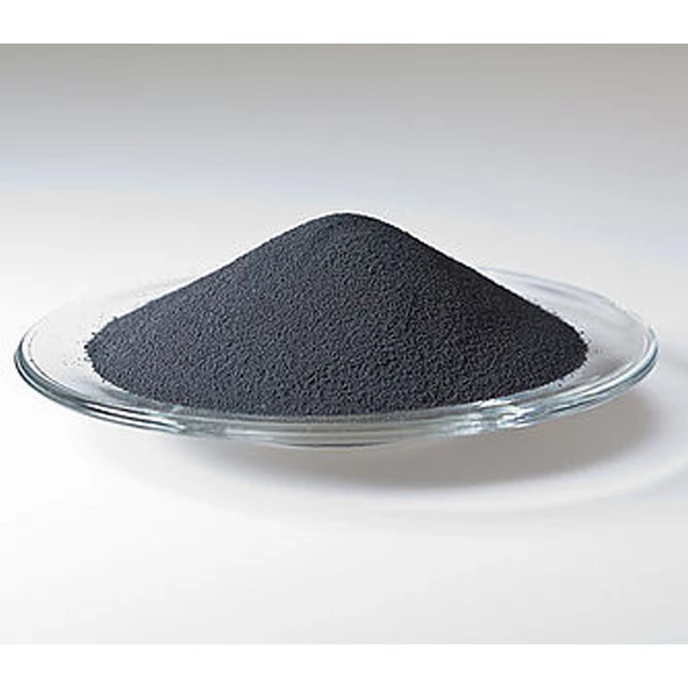
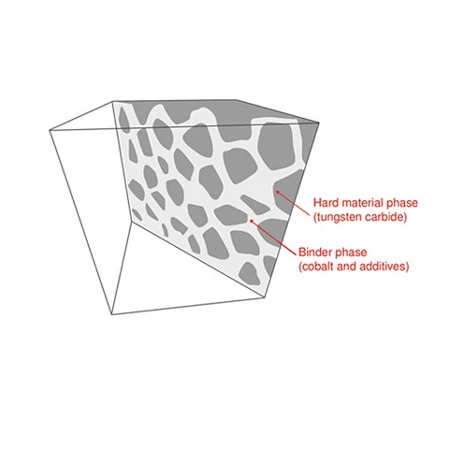
Understanding the Carbide Structure
Cemented carbide is a powder-metallurgical two-phase material consisting of a hard material phase and a metal binder phase.
The hard material provides the necessary hardness and wear resistance, while the binder metal guarantees appropriate toughness.
For cutting tools and wear protection, tungsten carbide (WC) is generally used as the hard carbide phase and cobalt (Co) as the metal binder phase.
The combination of hard material and binder phase provides a balance of physical and mechanical properties required for demanding applications.
Hard Material + Binder Phase
Cemented carbide combines a hard material phase with a metallic binder phase to achieve the properties required for cutting tools and wear-protection applications.
The hard phase contributes hardness and wear resistance, while the binder phase contributes toughness.
Tungsten carbide and cobalt are commonly used components in cemented carbide for cutting-tool applications.
Grain Size of the Hard Material Phase
Important parameters for determining carbide properties include binder content and the average grain size of the hard material phase.
Classification by WC Grain Size
- Nano < 0.2 µm
- Ultrafine 0.2 – 0.5 µm
- Submicron 0.5 – 0.8 µm
- Fine 0.8 – 1.3 µm
- Medium 1.3 – 2.5 µm
- Coarse 2.5 – 6.0 µm
- Extra-Coarse > 6.0 µm
Properties of Cemented Carbide Relevant for Applications
Cemented carbide properties depend on the combination of binder content, grain size and material composition.
Wear Resistance
Important for applications where resistance to wear is required.
Compressive Strength
Supports applications involving significant compressive loading.
Impact Strength
Relevant where carbide components experience impact-related loads.
Transverse Rupture Strength
A relevant mechanical property when evaluating carbide performance.
Specific Weight
Material density is one of the properties used when evaluating carbide grades.
Magnetic Properties
Magnetic behaviour forms part of carbide material characterization.
Young's Modulus
Modulus of elasticity is an important property related to rigidity.
Thermal Properties
Thermal characteristics influence carbide behaviour under machining conditions.
Corrosion & Oxidation Resistance
Resistance to environmental and thermal effects is relevant for selected applications.
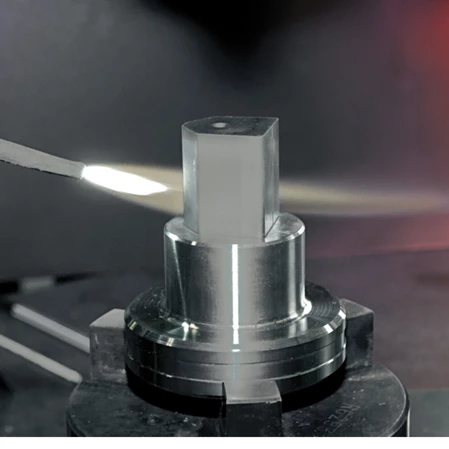
Advantages of Cemented Carbide
- Does not wear as quickly as it is harder.
- Retains strength even at high temperatures.
- Suitable for application fields where tools or components are exposed to high wear.
- Supports improved quality of tools and parts.
- Can contribute to longer tool life.
- Provides application-oriented material performance for demanding machining conditions.
Cemented Carbide Compared With Other Materials
Different hard and cutting materials provide different combinations of wear resistance, toughness and application performance.
- Diamond / PCD: extremely hard material with high wear resistance and specific application requirements.
- Cubic boron nitride (CBN): high hardness and wear resistance for selected applications.
- Ceramics: very low density with high hardness and wear resistance.
- Cermet: combines high hardness with ceramic characteristics.
- Cemented carbide: combines hardness, wear resistance and toughness for a wide range of cutting applications.
- HSS: offers toughness and is widely used for suitable cutting-tool applications.
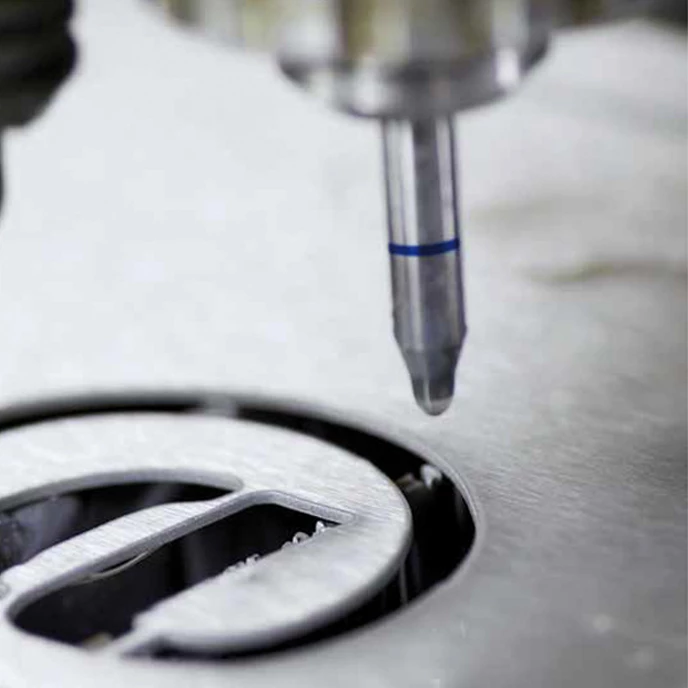
Application-Focused Carbide Solutions
Truedge Global supports machining requirements with application-specific solid carbide solutions designed around component geometry, material, machine and cutting conditions.